VIP 25% Discount - Register in the Next 48 Hours!
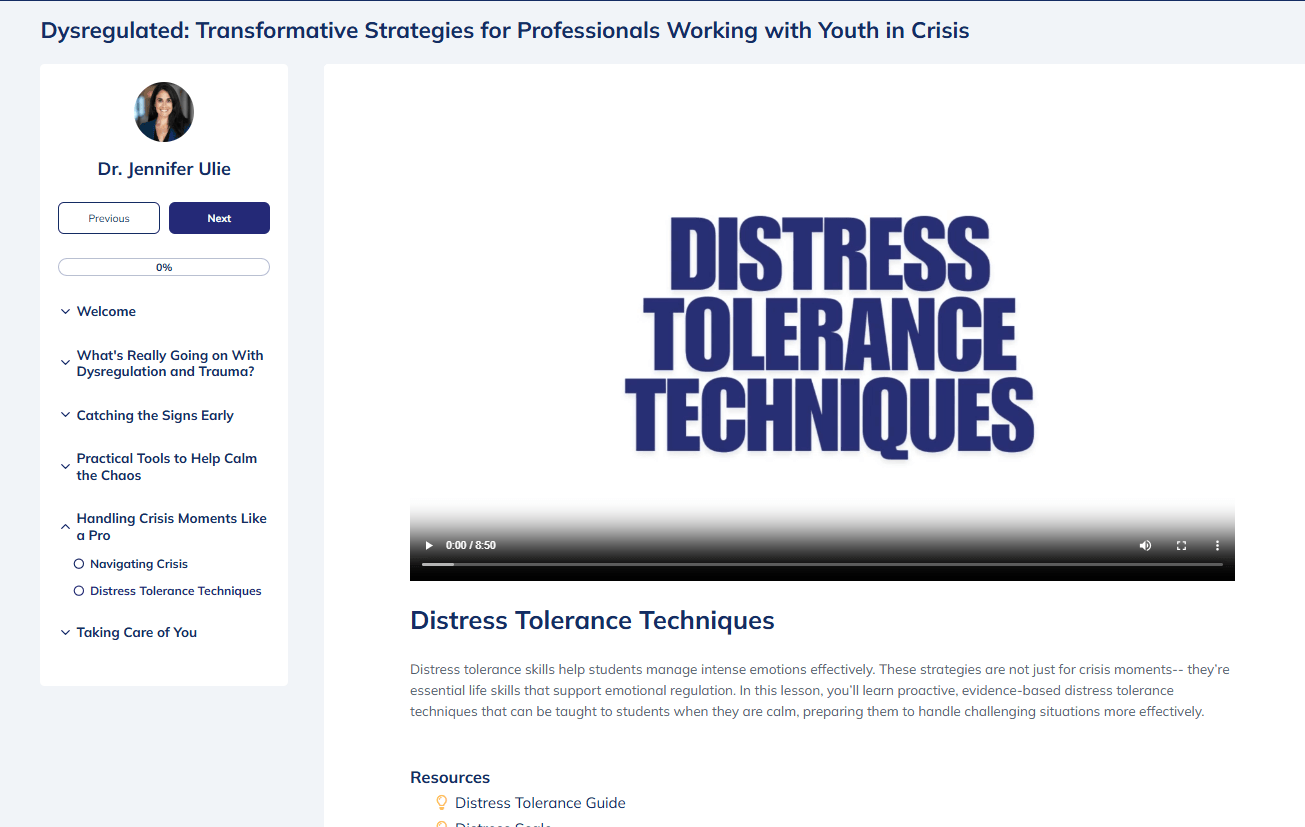
Dysregulated
When the usual behavior strategies are not enough, you need more than another technique. You need to understand what is happening beneath the behavior, what changes when a young person becomes dysregulated, and how to respond in ways that support safety, connection, and regulation.
You can know every strategy and still feel completely stuck in the moment.
A young person escalates over something that seems small. Another shuts down and will not engage. Someone else appears oppositional, impulsive, explosive, avoidant, or unreachable. You try choices, consequences, calming tools, relationship-building, redirection, rewards, breaks, breathing, and all the things you were told should help. Sometimes they do. Sometimes they do not.
That does not mean you need a longer list of tricks. It may mean you need a better map of what is happening.
You are responsible for helping young people through moments no one really trained you for.
Dysregulated was created for the adults who are expected to respond when emotions, behavior, stress, trauma, and mental health collide in real life.
You want to understand the context, nervous-system response, skill gaps, and needs beneath behavior instead of reacting only to what is visible.
You want ways to respond that reduce unnecessary escalation while still maintaining boundaries, expectations, and safety.
The young people you work with may be navigating trauma, anxiety, neurodivergence, mental health challenges, instability, or chronic stress.
You care about understanding the science, but you also need that science translated into decisions you can make in classrooms, programs, clinics, homes, and systems.
The goal is not to become better at controlling behavior.
It is to become better at reading what is happening, recognizing what the moment requires, and responding with more confidence and less guesswork.
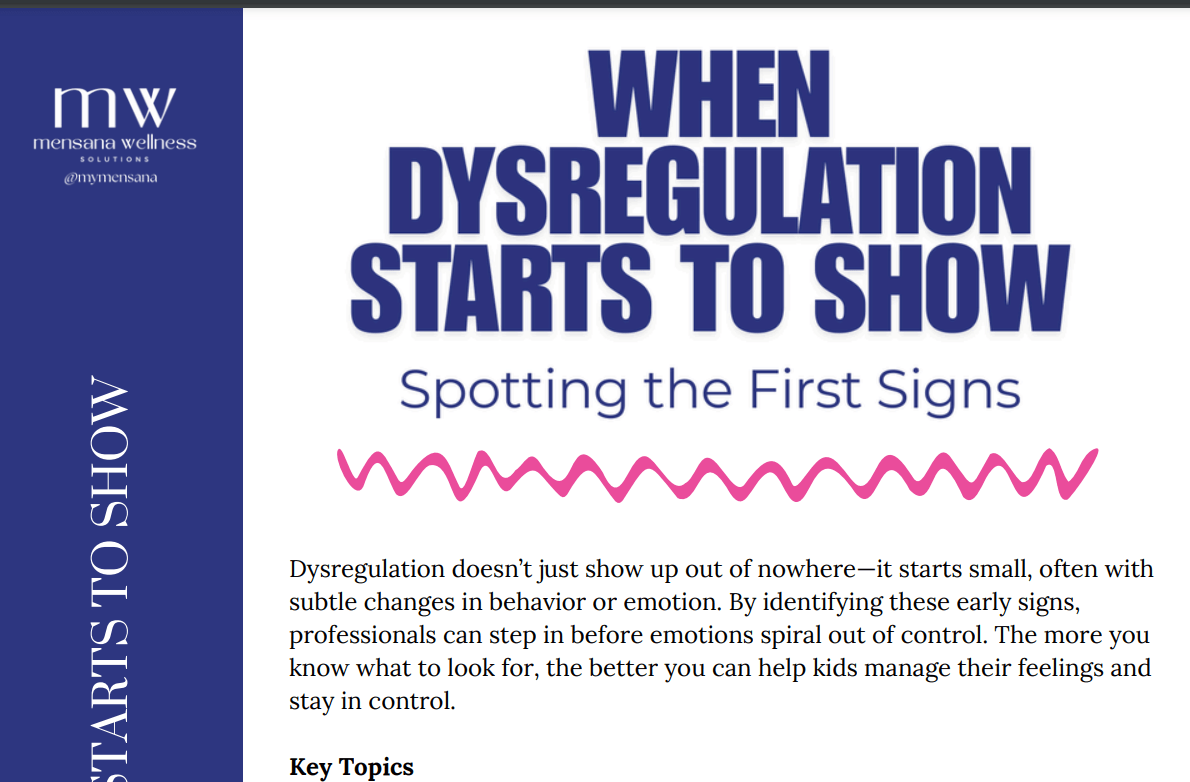
See dysregulation earlier.
Notice patterns, stress responses, escalation signals, and changes in capacity before the situation reaches its most visible point.
Understand the brain behind the behavior.
Connect nervous-system activation, emotional regulation, trauma, stress, development, and behavior in ways that make practical sense.
Choose responses more intentionally.
Move away from automatically adding consequences or demands and toward responses that fit what the young person can access in the moment.
De-escalate without abandoning boundaries.
Support emotional safety and regulation while still holding appropriate limits, responsibilities, and expectations.
Build skills beyond the crisis.
Help young people recognize emotions, tolerate distress, recover from activation, and expand the skills available to them over time.
Protect your own capacity, too.
Examine the emotional load of this work and the role your own regulation plays when you are supporting someone else through theirs.
Go beyond “what should I do?” and understand why a response works.
The course is designed to help you connect what we know about regulation, stress, relationships, behavior, and development to the decisions you make in real situations.
Learn what changes when the brain and body move into survival responses and why reasoning, flexibility, memory, and impulse control may be harder to access.
Consider context, unmet needs, emotional states, patterns, stressors, skills, relationships, and environmental factors that may be shaping what you see.
Identify signs that a young person is moving outside their available capacity so you can intervene before the situation becomes harder to recover from.
Use practical strategies for communication, co-regulation, emotional safety, boundaries, distress tolerance, and de-escalation.
Support young people in expanding emotional awareness, regulation, recovery, help-seeking, and their ability to navigate difficult moments.
Explore how our own regulation, expectations, environments, policies, and relationships can influence what happens before, during, and after dysregulation.

Better questions create better options.
Instead of asking only, “How do I get this behavior to stop?” Dysregulated helps you ask what is happening, what the young person can access right now, what may be contributing, and what response is most likely to help. That changes the conversation from control alone to understanding, safety, skill, and possibility.
Learning that changes how people see the work.
“I signed up for the course hoping I would get something out of it, but fearful that it might be a waste of my time. The class so incredibly surpassed even my highest expectations.”Timothy W. · Mental Health Clinical Director


Built from the intersection of research, practice, systems work, and lived experience.
Dr. Jennifer Ulie has spent decades working across education, school mental health, nonprofit leadership, youth-serving systems, professional learning, and family advocacy. Dysregulated brings those perspectives together to make complex ideas understandable, practical, and usable for the people doing this work every day.
A few things people usually want to know.
Is this only for educators?
No. The course is designed for professionals who support young people across settings, including education, mental health, human services, nonprofits, residential programs, juvenile justice, and other youth-serving systems.
Is this therapy or clinical training?
No. Dysregulated is professional learning focused on understanding emotional regulation, behavior, stress, relationships, and practical response. It does not replace clinical assessment, treatment, or professional licensure requirements.
Will this just give me more calming strategies?
No. You will learn strategies, but the larger purpose is to help you understand when and why different responses may help so you are not relying on a one-size-fits-all list of techniques.
What if I already took the free Emotional Regulation workshop?
That workshop is the starting point. Dysregulated goes deeper into the concepts, patterns, responses, and practical application so you can build a fuller framework for supporting youth with more complex needs.
Is the course self-paced?
Yes. Dysregulated is designed so you can move through the learning on your own schedule and return to the material as needed.
See the young person, the behavior, and the moment with more of the picture.
Dysregulated is for professionals who want more than another list of strategies. It is for people who want to understand what is happening, respond with greater confidence, and help young people build skills that last beyond the immediate crisis.
MyMensana 2026